”Racism must be named and challenged whenever it occurs. Ignoring, minimising, or excusing racist behaviour only reinforces its impact. Its effects are often invisible to those who do not experience it, yet deeply felt by those who do”.
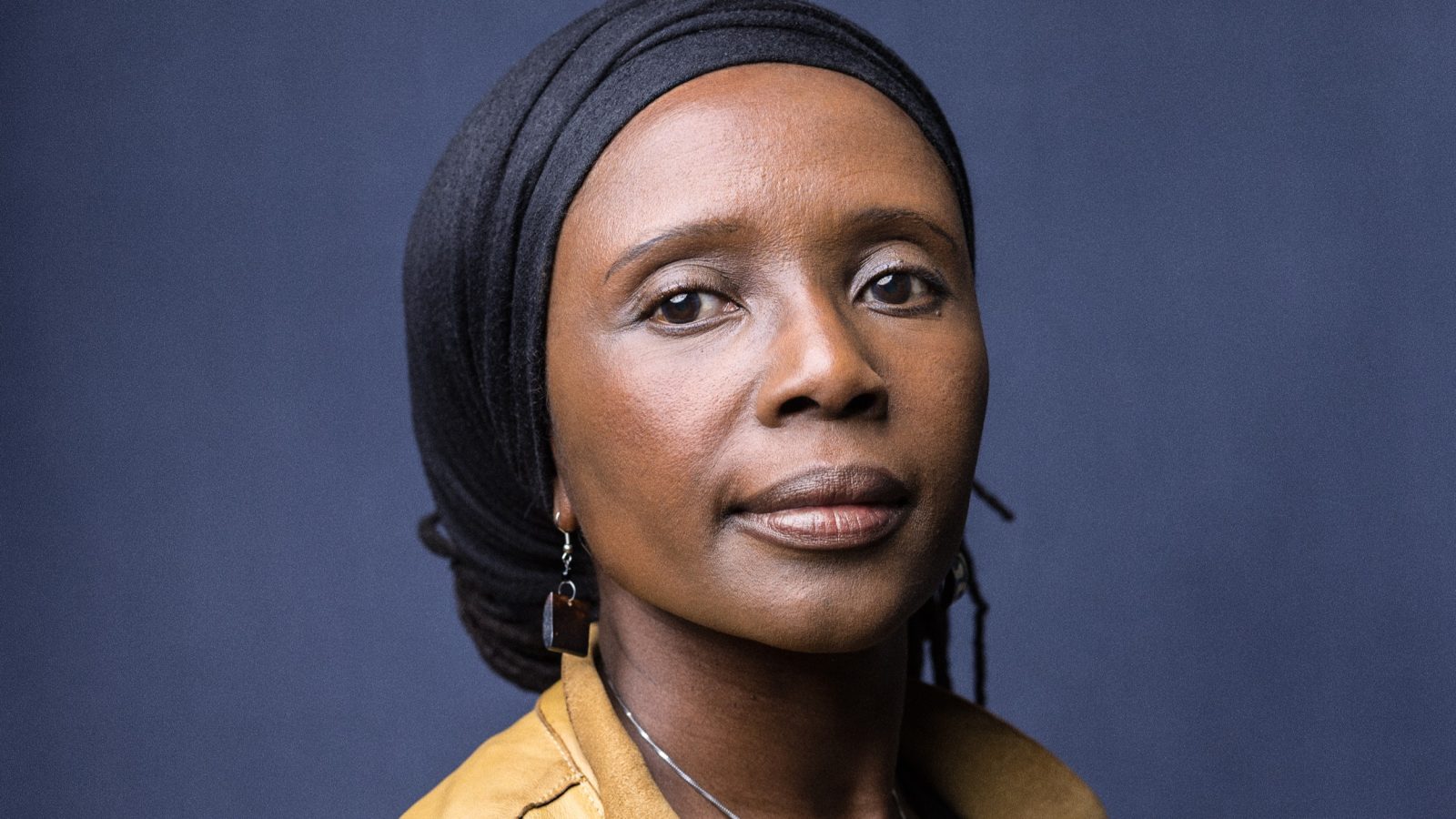
As an academic, activist, coach, consultant, and international speaker, Sarifa Moola-Nernæs combines lived experience with research and advocacy to challenge racism and promote more inclusive societies. Moola-Nernæs is a member of The Nordic Migrant Expert Forum, a forum that was established to strengthen dialogue between the Nordic Council of Ministers and migrants to Nordic countries.
– Racism is embedded in our systems, and we need research that acknowledges this. But systems are created by people. Until we shift our mindsets and narratives, we cannot begin to implement what the research has already shown.
Having grown up in apartheid South Africa, Moola-Nernæs witnessed firsthand how systems can shape people’s lives and determine who belongs and who does not. Her years of involvement in anti-apartheid activism continue to shape her work and worldview.
– The struggle taught me to keep looking for ways to build a better society and to challenge the disease that racism is. It is a disease for which we are still struggling to find a cure.
Racism beyond individual prejudice
Addressing racism at the individual level calls for people to take responsibility and speak out. However, in focusing on individual racism, we can sometimes overlook its broader structural dimensions.
– Racism cannot be understood only as individual acts of prejudice. It is embedded within policies, institutions, and everyday practices that shape access to opportunity and belonging.
Increasingly restrictive language requirements and declining recognition of foreign qualifications are examples of how many migrants are prevented from fully participating in Nordic societies, Moola-Nernæs argues. The consequences of structural racism extend far beyond employment and the job market.
– Exclusion can contribute to poverty, poor mental health, social isolation, and growing polarisation. At the same time, public discourse often frames migrants as a burden rather than recognising their contributions and potential. Such narratives fuel misinformation and create fertile ground for populism.
The danger of the “hero mentality”
One of the most distinctive aspects of Moola-Nernæs’s thinking is her warning about what she calls the Nordic ”hero mentality” – the belief that social justice work is driven by moral certainty rather than by accountability and shared learning. She argues that this mindset can unintentionally reinforce unequal power relations.
– In my view, it can create a situation in which Nordic institutions and people are positioned as experts holding the solutions, whilst overlooking the knowledge, experiences, and agency of the communities they seek to support.
According to Moola-Nernæs, this mentality has deep historical roots in the era of enslavement, missionary traditions, and colonial structures that continue to shape contemporary approaches to diversity, equity, and inclusion. Even well-intentioned efforts can reproduce hierarchy if organisations fail to ask difficult questions about who makes decisions, whose voices are heard, and who benefits from the outcomes.
– What matters is not whether an initiative appears progressive, but whether it genuinely redistributes power and creates space for meaningful participation. Meaningful inclusion requires humility. It demands a willingness to move from speaking for communities to working alongside them.
When inclusion becomes tokenism
Throughout her career, Sarifa Moola-Nernæs has often found herself as the only person of colour in professional and decision-making spaces. While visibility can be important, she warns that representation alone is not enough.
– Too often, institutions point to the presence of one racialised individual as evidence of progress whilst leaving existing power structures untouched. The result is inclusion in appearance rather than inclusion in practice. Tokenism creates the appearance of change without addressing the underlying systems that determine who has influence, who is heard, and who gets to shape decisions.
For Moola-Nernæs, genuine inclusion means broadening participation, creating pathways for diverse leadership, and ensuring that representation is matched by real authority and decision-making power. At the heart of her work lies the South African philosophy of Ubuntu, often translated as ”I am because we are.”
– Ubuntu recognises that our lives are bound together and that our humanity is shaped by how we treat one another. It challenges individuals, institutions, and policymakers to look beyond good intentions and ask whether their actions genuinely uphold the dignity and humanity of others.
Belonging requires a willingness to share power
In her recommendations as a member of the Nordic Migrant Expert Forum, Moola-Nernæs focuses on young people. She also emphasises the need for schools and youth spaces to work more actively with identity, belonging, and representation.
– Schools, public institutions, policymakers, communities, and families all have a role to play in confronting racism and creating environments where every child and young person feels seen, valued, and safe.
Despite many challenges, Moola-Nernæs remains hopeful that Nordic societies can become better at relating to the people their integration efforts are intended to serve. She reminds us that historically, humanity has overcome enormous challenges through collective effort and determination. The same commitment is needed to address racism.
– My starting point, based on my own experience, is the need to move away from viewing migrants as problems to be managed and towards recognising them as human beings with knowledge, dignity, and agency. This work demands courage, accountability, honest conversations, and a willingness to share power, and it needs to happen at every level of society.
When Sarifa Moola-Nernæs reflects on her role in the Nordic Migrant Expert Forum, she turns to the image of a jigsaw puzzle. Each member is a unique piece, gradually finding its place in the larger picture.
– Seeing these pieces fall into place gives me confidence that we are contributing to something real.
Text: Sebastian Dahlström
Photo: Martin Thaulow
Publicerad
30 Jun 2026
Fakta
Sarifa Moola-Nernæs:
Anti-racism activist, entrepreneur, coach, consultant, and international speaker with a PhD in Sociolinguistics and a Master’s in Peace Studies. Born in South Africa, living in Norway.
Sarifa Moola-Nernæs works as a coach focusing on career coaching, professional development, and community building. She works as a Project Leader at Grannehjelpa Stifting (Voluntary Centre) and as a coach at INNO-SCI Digital Academy, and through her own company, Ubuntu Coaching.
As a member of the Nordic Migrant Expert Forum (2025–2027), she recommends:
Make anti-racism education and training mandatory in all institutions working with children, young people, and families. Establish national monitoring systems that track experiences and effects of discrimination. Fund campaigns and local storytelling projects that expose the everyday realities of racism. Involve affected communities in developing and evaluating anti-racism strategies and standards.
The Nordic Migrant Expert Forum was established to strengthen dialogue between the Nordic Council of Ministers and migrants to Nordic countries. The Forum (2025–2027) brings together 16 experts to ensure that migrant perspectives and evidence-based insights are reflected in Nordic policymaking.